The Twelve-Degree Rule: How Village Halls Keep the Winter Out (Just About)
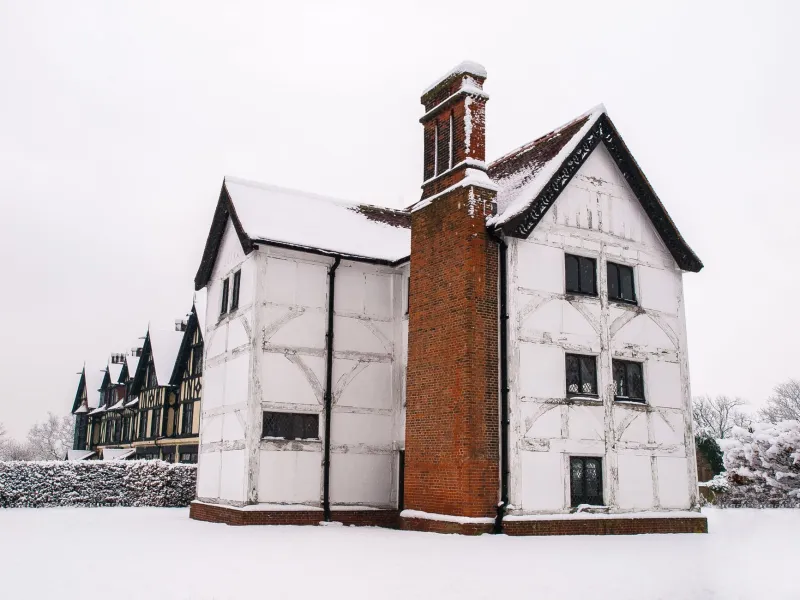
On a Tuesday evening in early November, the thermometer in the main hall reads 13°C. The caretaker gives the boiler a meaningful look. The boiler, as ever, is thinking about it.
This is the annual village-hall ritual, played out in thousands of community buildings across the UK. Before the quiz night, before the toddler group, before the Christmas fair with its slightly optimistic tombola, somebody has to make the heating work. And that somebody is almost never a paid contractor. It is a volunteer with a radiator key, a torch and a mobile phone number for a man called Derek.
The boiler has its own subcommittee
Strictly speaking, the hall committee is responsible for the building. In practice, heating gets its own informal working group: the retired plumber, the treasurer, the bookings secretary and anyone who has ever successfully reset a pressure valve without flooding the kitchen.
“We don’t have a formal boiler subcommittee,” says Marion, treasurer of a hall in south Leicestershire. “But we do have a WhatsApp group called Radiator Watch, and it has eleven members. That’s close enough.”
The group meets when the boiler makes a noise, when a quote arrives, or when the frost stat clicks on in an empty hall at 2am and somebody has to go and check. Minutes are kept on the back of a booking form. Decisions are made by consensus, tea and a certain amount of sighing.
Bleeding radiators is a social activity
The first cold snap brings the familiar jobs. Radiator keys come out of the drawer. Towels are deployed. Somebody stands on a chair and says, “It’s coming out black, that can’t be right.” It usually is right.
Then there is the draught patrol: foam strips around the fire doors, a sausage-dog draught excluder made by the WI, and a polite debate about whether the curtains count as thermal lining or just “quite thick”. A local council may lend out a thermal imaging camera; the pictures are always a revelation and never flattering. The loft hatch glows orange on the screen like a small sun.
In 2026, the energy conversation has shifted. Bills are still biting, and halls are still comparing tariffs with the same grim fascination as football scores. But the language has changed from “keep the heating off” to “heat the room we’re actually using”. Zoning, timers and the humble thermostat are now committee-level topics.
The quote nobody wants to read out
Sooner or later, the boiler stops being a maintenance issue and becomes a capital project. Three engineers visit. Three quotes arrive. The cheapest is rarely the simplest, and the most expensive always includes something described as “enabling works”.
At one hall in Norfolk, the committee spent most of the 2025–26 winter debating whether to replace an oil-fired boiler or spend another year with extra jumpers and a well-placed fan heater. The replacement quote came in at just over £18,000. The reserves were £19,000. The roof also needed attention.
“You sit in the AGM and you realise you’re not really talking about heating,” says Priya, bookings secretary. “You’re talking about what the hall is for. If we spend the reserves on the boiler, we can’t do the kitchen. If we don’t do the boiler, we might not have a hall to do the kitchen in.”
They went for a hybrid: a new condensing boiler, a grant from a community energy fund, and a fundraising appeal that sold sponsorship of individual radiators. The radiator nearest the stage is now proudly labelled “Sponsored by the Tuesday Keep-Fit Group”.
Heat as hospitality
There is a practical definition of a warm space, and then there is the version that matters. A hall at 18°C with a kettle and a few familiar faces is warmer than a hall at 21°C with nobody in it.
“We’re not a day centre,” says Derek, the retired plumber who chairs the informal boiler group. “We’re a room. But a warm room with a loo and a cup of tea is a public service in January. You don’t need a strategy document for that. You need a working thermostat and someone willing to put the urn on.”
That is why the unglamorous work matters. The person who checks the boiler pressure on a Friday afternoon is part of the same civic infrastructure as the volunteer who runs the food bank collection. It is just less visible, and considerably less photogenic.
The small stuff that keeps the doors open
If you use a village hall this winter, here is what the committee would quietly like you to know. Do not adjust the thermostat unless you are on the list. Do not prop the fire doors open “just for a minute”. If you book the hall, allow ten minutes at the end for the caretaker to check the heating is off, the windows are shut and the frost stat has not been triggered. And if you see a volunteer carrying a radiator key and a bucket, say thank you. It is a small thing, but it is the whole thing.
By 9pm, the hall has reached a respectable 17°C. The quiz teams have taken their coats off. The boiler is still making a noise, but it is a contented noise. Nobody claps for the heating. They never do. But the room is full, the tea urn is working, and the doors are open for another winter.