Bring Your Broken Kettle: The Monthly Repair Café That Mends More Than Appliances
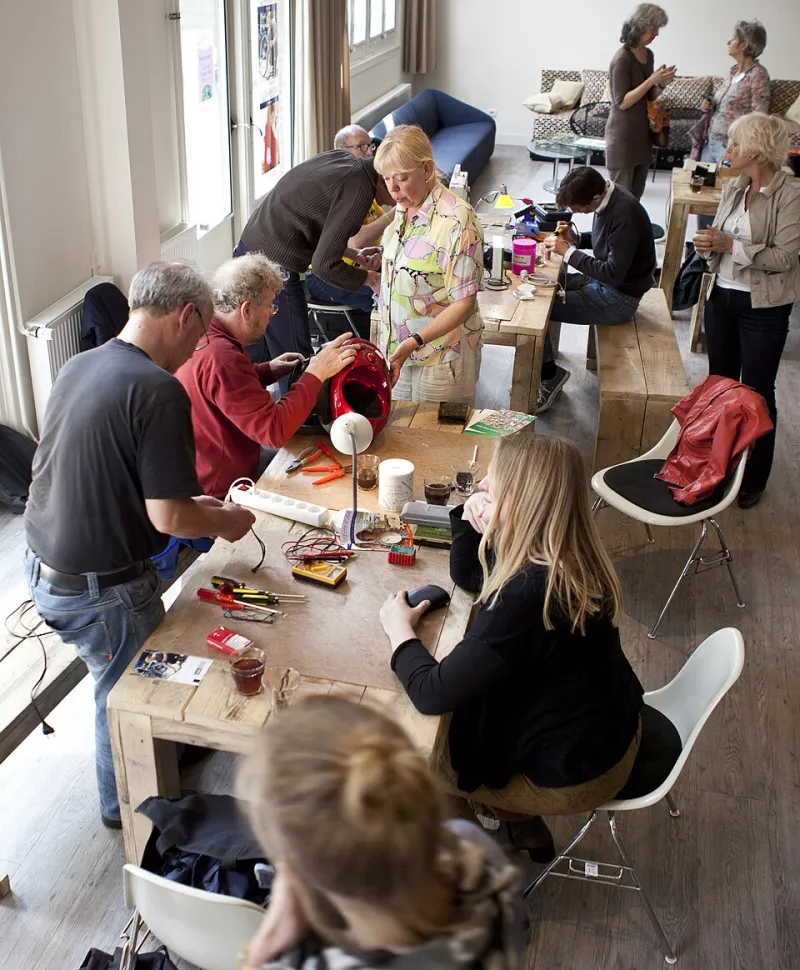
Photo: Ilvy Njiokiktjien, CC BY-SA 3.0, via Wikimedia Commons
On the first Saturday of the month, a small queue forms outside a high street unit that used to sell hardware. People are holding kettles. One man has a lamp with a frayed flex. A child is carrying a wooden train with a missing wheel. By ten past ten, the tables are out, the tea urn is on, and a volunteer in a blue apron is saying, 'Right, let's have a look at that toaster.'
A Queue of Broken Things
The repair café is exactly what it sounds like, and also not quite. It is a place where you can take a broken household item and, with luck and a screwdriver, learn how to fix it. It is not a free repair shop. It is a workshop with helpers. The distinction matters. You are not dropping off your kettle and coming back later. You are sitting down, taking the back off, and finding out what a fuse looks like. The volunteer will guide you, but they will not do it all for you. That is the point.
The items that come through the door are ordinary and revealing. Toasters with crumbs in the wrong places. Lamps that have done twenty years of service. Vacuum cleaners that have lost suction. Radios that hum. Jeans with a torn pocket. A teddy bear that needs a new arm. Some things are fixed in ten minutes. Some are declared beyond economical repair, which is a polite way of saying the part costs more than the item. But even then, there is a conversation about what to do next.
The Quiet Economics of Mending
The UK throws away a staggering amount of small electrical goods. Many of them are not actually broken. They are fuse-blown, clogged, or suffering from a loose connection. A repair café is a small intervention against that tide. It keeps things out of landfill for a while longer. It saves the owner money. And it passes on a skill that has been quietly disappearing from ordinary life.
There is an economic argument, too. High streets have lost the repair shops that used to sit alongside the hardware shop and the cobblers. The repair café does not replace those businesses, but it does remind people that things can be mended. It also creates footfall. A queue outside a unit on a Saturday morning is a small sign of life. The café might meet in a library, a church hall or a former shop. Wherever it is, it puts people on the street and gives them a reason to stay.
Tea, Biscuits and the Social Repair
The social side is not a side. It is the main event with a screwdriver in its hand. You sit next to someone you have never met. You both stare at the inside of a kettle. You ask what they are working on. They tell you about their mother's sewing machine. Someone passes the biscuits. Someone else says, 'Have you tried the fuse?' The tea is strong. The conversation is easy. For an hour, you are not a consumer. You are a person with a broken thing and a neighbour with a toolkit.
This is why repair cafés feel different from a drop-off service. They are slow on purpose. They make room for the awkward beginner. They celebrate the small victory of a lamp that switches on. And they are run by volunteers who would rather teach you than do it for you. That generosity is the whole engine.
Why the High Street Should Pay Attention
The repair café movement has been growing in the UK for years. It is part of a wider shift: people wanting to buy less, mend more and meet the people who live nearby. High streets are part of that conversation. A vacant unit can become a monthly workshop. A library can host a table of broken radios. A community centre can lend its kitchen for the tea. None of this needs a huge budget. It needs a few people with tools, a venue, and a date that people can remember.
There is also a quieter point about local resilience. When you know how to fix a plug, you are less helpless. When you know who can fix a plug, you are less alone. The high street used to be a place where those skills were visible. The repair café brings a little of that back.
How to Find One (or Start One) Near You
Start by searching for your nearest repair café. The Repair Café Foundation has a map, and local Facebook groups and library noticeboards are good places to look. If there is not one nearby, you could help start one. You will need a venue with tables and power, a handful of volunteers with different skills, and a simple booking system. Public liability insurance is worth checking. So is PAT testing for electrical items. The Restart Project has guides and resources. But the first step is smaller than all that: ask around. Someone in your street probably has a soldering iron and a spare Saturday.
The Toaster That Lived
The toaster on the table has been pronounced dead twice. The first time, it was a fuse. The second time, it was a broken lever. Now it is working again, slightly wonky but functional. The owner is delighted. The volunteer is already looking at the next item. The tea urn is still on. And outside, the high street is doing what high streets do: waiting for people to come back. The repair café gives them a reason. Bring your broken things. You might leave with a working kettle and a new acquaintance. That is a good Saturday.