One Glove, Three Keys and a Very Patient Volunteer
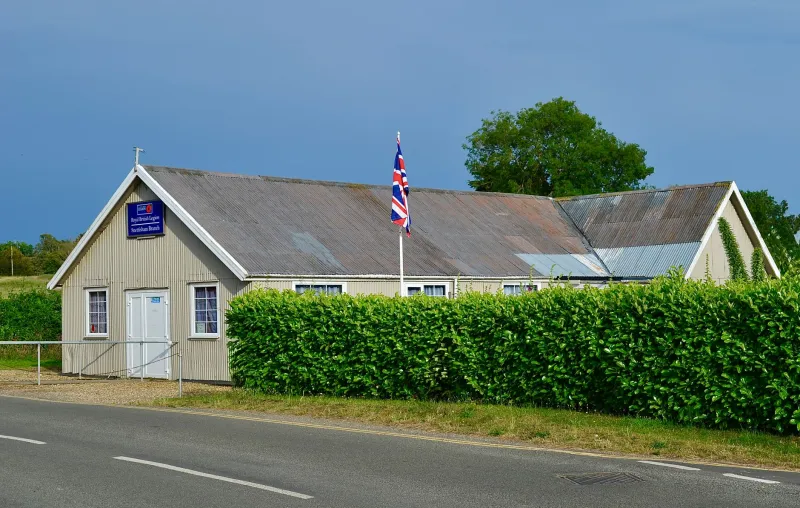
On a damp Tuesday this November, I found myself kneeling beside the tea urn in the village hall kitchen, peering into a cardboard box marked LOST in biro. The lid had gone slightly soft at one corner. Inside was a small, oddly moving museum: one glove, then another, then a third that matched none of them.
It is not an official museum. There is no gift shop, no audio guide, no laminated timeline. But the lost property box has a curator of sorts — a volunteer who checks it after every quiz night, jumble sale and toddler group, and who has developed the patient expression of someone who has reunited more bobble hats with their owners than she can count.
The cupboard by the tea urn
The box lives next to the kitchen door, below the shelf of mismatched mugs. It is the first place people look when they have lost something, and the last place they remember to check. Over the years it has become a kind of community confession booth. We are all capable of leaving a umbrella behind, forgetting a lunchbox, or putting down a pair of glasses and walking away as if they were someone else's problem.
What surprises you is not the volume. It is the specificity. There is a child's welly with a dinosaur on the side, a set of keys on a faded Boots fob, a plastic tub with 'CATH — DO NOT EAT' written on the lid in marker pen, a single reading glasses lens case, a dog lead with no dog, and a phone charger that has clearly been in there since the last century. Possibly longer.
There is also a birthday card, still in its envelope, addressed to 'Nan'. That one is harder to laugh at. Someone bought it, wrote it, lost it, and probably bought another. It sits in the box like a small unfinished errand.
A catalogue of near misses
Let us take a light-hearted inventory, because that is what the box seems to invite. At the time of my visit, the contents included:
- seventeen single gloves, of which two were left-hand, fourteen were right-hand, and one was so ambiguous it may have been a sock;
- three keys, none with an address, all with the quiet confidence of things that used to open something important;
- one Tupperware container, clean, with a note on the lid that read 'SAUSAGE ROLLS — VEGGIE ONES UNDER';
- a pair of reading glasses, a dog collar, a swimming goggles strap and a paperback novel with a bookmark six pages in;
- one child's welly, a fabric shopping bag, and a phone charger with a plug so old it belongs in a museum display case;
- and the birthday card for Nan, which I am choosing to believe was eventually replaced and delivered.
The volunteer — let us call her Sue — has a system. It is not written down. It lives in her head, along with the knowledge that the woman from the post office always loses her gloves at the Christmas fair, and that the toddler group has a habit of leaving beakers on the windowsill. She puts a strip of masking tape on anything valuable, writes the date, and mentions it on the village WhatsApp group. If nobody claims an item after a few weeks, she moves it to a shelf in the back room and tries again.
What a single glove can tell you
There is a temptation to treat the box as a joke about how scatterbrained we all are. But spend ten minutes with it and a different picture emerges. A lost property box is a social barometer. It measures whether people feel able to hand things in, whether anyone bothers to check, and whether the community has a quiet routine for returning what was never really lost — just misplaced.
Think about it. If you find a glove on a bench, you have three choices. You can ignore it, take it home and forget it, or drop it in the box by the tea urn. That third choice is an act of optimism. It says: someone will come back, or someone will know who owns it. The box only works because enough people believe that small kindnesses are worth the bother.
In a bigger town, lost property often ends up in a bin or a drawer. Here, it ends up in a box with a biro label and a volunteer who checks it after every event. That is not nostalgia for a mythical past. It is just a practical habit — one that makes a hall feel less like a building and more like a shared front room.
There is also a gentler side. The gloves are the most poignant items. Nobody loses both gloves at once, do they? One goes missing, and the other stays at home, useless and slightly resentful. The box is full of these half-pairs. Sue once reunited a glove with its owner after three months because she recognised the pattern from a jacket in the cloakroom. The owner was delighted, said she had kept the other one 'just in case', and admitted she had been wearing odd gloves for weeks.
The case for a lost-property rota
For all its charm, the box could do with a little more structure. Not a committee, not a spreadsheet with nineteen tabs. Just a rota. A simple, friendly rota. One person checks the box after each event, logs the item and date on a sheet taped inside the lid, and takes a photo for the noticeboard and the street WhatsApp group. Once a month, someone sorts the unclaimed items into three piles: return, donate, recycle.
The donate pile matters. Unclaimed gloves and scarves can go to the winter warm room or the charity shop on the high street. Clean Tupperware can go to the community café. Odd keys can be recycled. The birthday card for Nan can stay a little longer, because you never know.
A rota also spreads the load. At the moment, Sue does most of it because she is the sort of person who notices. That is not a sustainable system. It is a kindness held up by one pair of hands. A rota turns it into a habit the whole hall can share — and it gives new volunteers an easy, low-pressure way in. Fifteen minutes after a coffee morning is not a big ask. It is the kind of small job that makes a place work.
Small returns, big signal
So next time you are in the village hall and you see the box by the tea urn, have a look. You probably will not find your missing glove. You might find someone else's. If you do, mention it on the group chat. Check the noticeboard. Ask at the quiz. Return it if you can.
It is a small thing. But a community is built out of small things — and a box of odd gloves is as good a place as any to start.